
Shorts Wrap: Erik Jasaň’s Predictions for the Oscar Nominations in Short Film
- Alexander Hulic
- Jan 14
- 5 min read
Short film is often a laboratory of future trends during Oscar season - formal, thematic, and production-related. This year’s shortlist for Best Live Action Short Film once again shows that the Academy is looking not only for strong subject matter, but above all for precise dramaturgy, a clear authorial stance, and films that can carry ethical and emotional weight within a short format. In this text, I offer my personal predictions for the Oscar nominations. I also include several additional films that had a strong voice and, in my view, could still shake up the race for an Oscar nomination. I consider the following five titles to be the strongest candidates ones that filmmakers and curators should not miss:

ADO
(dir. Sam Henderson)
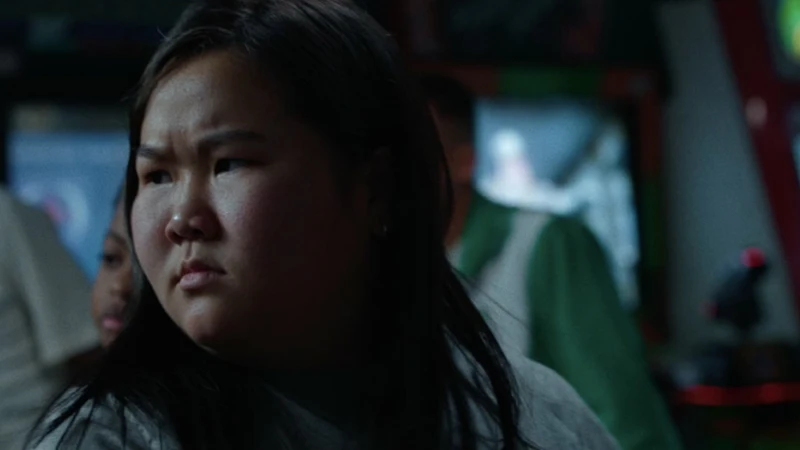
Ado is a remarkably precise example of how a “big” social issue (school shootings) can be approached through a small, focused situation without cheap sensationalism. The premise is a rehearsal of Shakespeare’s Much Ado About Nothing, interrupted by an active shooter, with the film deliberately maintaining the perspective of a teacher rather than the action itself. This directorial choice generates the greatest tension, not through action beats, but through the ethics of communication, the pressure of time, and the impossibility of a “right” response. Jenifer Lewis carries the film as a character study of professional empathy under extreme pressure, where pedagogical authority turns into improvised life-or-death negotiation. It is also powerful that Henderson does not rely solely on shock, but on fragile humanity, which many reactions cite as the key difference from similar films on the subject. I recommend seeing it for its clean dramaturgical arc, strong performance, and disciplined use of limited space and time.

Rock, Paper, Scissors
(dir. Franz Böhm)
This film belongs to a group of war shorts that do not draw strength merely from the “gravity of the subject,” but from a specific, dramatically explosive decision in a situation with no good outcome. The story follows Ukrainian soldier Ivan and his father in a makeshift frontline hospital as Russian soldiers approach the building and every possible choice carries both moral and physical consequences. Böhm employs a thriller structure the pressure escalates through space, sound, and rhythm rather than explanatory dialogue. Crucially, the film is explicitly inspired by real events and was made in close collaboration with people whose experiences it represents, giving it a strong sense of authenticity and grounding. Technically precise and dramatically compact, it is, in my view, the most cohesive title of the five. I recommend it for its clear storytelling, sustained tension, and emotional aftertaste.

Two People Exchanging Saliva
(dir. Alexandre Singh & Natalie Musteata)
The title may sound provocative, but the film is a carefully constructed dystopian tragicomedy with precise world-building: in a society where kissing is punishable by death, “transactions” take place through slaps. The filmmakers build this absurd premise into a functioning social system that is both ridiculous and terrifying and it is precisely here that its critique of repression, desire, and surveillance emerges. The cast (including Zar Amir Ebrahimi, Luàna Bajrami, and narration by Vicky Krieps) helps sustain emotional engagement even within a stylized world. For some viewers, the first half may feel deliberately elusive, but the film gradually clarifies the rules of its universe. It works best as a clear demonstration that “arthouse” can also be audience-friendly if it has rhythm, payoff, and internal logic. I recommend it for its combination of concept, craft, and ability to be unsettlingly entertaining.

Jane Austen’s Period Drama
(dir. Julia Aks & Steve Pinder)
This is exactly the kind of comedy that masquerades as a “period piece” in order to shamelessly dismantle a taboo - menstruation. The film sets its situation in England in 1813 and begins with an intentionally clichéd romantic moment (an engagement), which is immediately disrupted by biological reality and male ignorance. The punchline is simple, but it works because the filmmakers push it through detailed direction and tight comic timing rather than a single gag. At the same time, it is a satire of the genre itself: it uses “Austen” aesthetics as a language to comment on what period stories usually repress. The result is a film that entertains both Jane Austen fans and viewers looking for sharp social comedy and it surprisingly works well “for men” too, because the humor targets the system, not the audience. Its short runtime is an advantage: the idea never wears thin, remaining fresh and precisely timed. It’s not just a “period pun,” but a smartly executed genre play. I recommend it as the strongest comedic choice on the shortlist, thanks to its clear authorial angle and clean execution.

The Boy with White Skin
(dir. Simon Panay)
Panay’s film is “arthouse” in the best sense of the word: it relies on atmosphere, ritual, and sensory experience rather than explanation. The story follows an albino boy entrusted to a group of gold miners, for whom his body becomes part of belief, hope, and economy—opening up a difficult subject without moralizing. Most powerful is the film’s use of the mine as a space: claustrophobia, darkness, and sound turn the environment into an almost mythological organism that consumes the characters. The child at the center is not merely an “emotional trigger,” but an ethical mirror—the viewer feels both attachment and unease about how his innocence is being used. Several festival notes emphasize the connection between labor and myth, and the film truly feels like a meeting point between documentary attentiveness and fiction filmmaking. In the context of the shortlist, it functions as a counterpoint to more straightforward narrative titles, offering a pure audiovisual experience and a strong emotional resonance. I recommend it for its moral complexity and unusually powerful work with a child protagonist.






Unfortunately, there are only five nomination slots available. Nevertheless, there are countless films that could realistically make this selection. That is why I have put together an additional list of five titles with strong NOMINATION POTENTIAL. These films are:
Dad’s Not Home (dir. Jan Saczek) – An intimate social drama about two brothers who hide their father’s dementia from the outside world and are forced to grow up too soon. The film relies on restrained realism, precise details, and quiet moral pressure rather than emotional manipulation.
Amarela (dir. André Hayato Saito) – Set against the backdrop of the 1998 World Cup final, the film follows a Japanese-Brazilian teenage girl whose personal trauma contrasts sharply with the collective euphoria around her. A subtle portrait of identity and isolation, driven by suppressed emotion rather than explicit conflict.
A Friend of Dorothy (dir. Lee Knight) – A modest yet powerfully acted comedy about empathy and small human gestures that deliberately avoids sentimentality. Strong performances by Miriam Margolyes and Alistair Nwachukwu give the simple story rhythm and emotional authenticity.
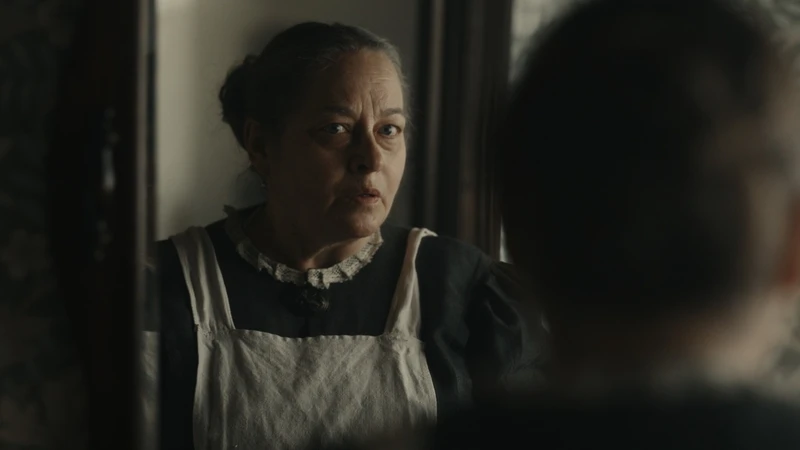
The Pearl Comb (dir. Ali Cook) – A late-19th-century historical ballad that blends community realism with mythological elements and themes of faith, power, and exclusion. Formally precise, the film builds a fully realized world in a short runtime, leaving a chilling ethical aftertaste.
Beyond Silence (dir. Marnie Blok) – A generational drama about two women connected by shared trauma, using silence as a fully developed dramatic device. Its commitment to authentic representation and precise performances makes it a sensitive yet deeply resonant work.
All the films on the shortlists represent the very best of contemporary short filmmaking, and their creators have already achieved significant success. Regardless of the final nominations, these are titles well worth seeking out. I hope my recommendations help guide your viewing choices for the coming evenings.


Comments